• Using AI to Flag Suspicious Reviews in Seconds

    Using AI to Flag Suspicious Reviews in Seconds

    Alright, buckle up, future-forward folks! We’re entering the realm of artificial intelligence and automation, and trust me, it’s not as scary as it sounds. In fact, it can be your secret weapon in the ongoing battle against those sneaky, suspicious Amazon reviews.

    Today, we’re going to talk about leveraging the power of AI to flag potentially problematic reviews faster than you can say “Seller Central notification overload.”

    The Problem: Humans vs. Mountains of Reviews

    Let’s be real. As your Amazon business grows, so does the influx of customer reviews. Sifting through hundreds, even thousands, of reviews to identify the genuinely problematic ones (the ones that violate guidelines, are clearly fake, or seem malicious) can feel like searching for a specific grain of sand on a very large beach. It’s time-consuming, tedious, and frankly, a task that could be better spent on more strategic activities.

    Enter AI: Your New Review-Sniffing Sidekick

    If you’ve used AI (and most of us have by now), you’ve seen what it can do. When it comes to reviews, think of it as a super-smart digital assistant that can read and analyze text with incredible speed and efficiency.

    We can harness this power to help us identify potentially suspicious reviews.  

    How Can AI Help Flag Suspicious Reviews?

    Here’s where the magic happens. By feeding AI examples of Amazon’s review guidelines and examples of both legitimate and suspicious reviews, we can train it to identify patterns and characteristics that often indicate a problem.

    Here are some ways AI can be your review-flagging superhero:

    • Identifying off-topic content: GPT can quickly recognize reviews that talk about shipping, packaging (unless directly related to the product’s condition upon arrival), or other seller-specific issues that shouldn’t be in the product review section.
    • Spotting promotional language: GPT can be trained to detect phrases and keywords that suggest a review is actually an advertisement for another product or service.
    • Detecting unusual language patterns: Fake or incentivized reviews often have generic, overly positive, or repetitive language. GPT can learn to flag these anomalies.  
    • Recognizing potential bias: While trickier, GPT can be trained to identify reviews that use language suggesting a personal relationship or a clear incentive.
    • Summarizing review content: Even if GPT doesn’t definitively flag a review, it can quickly summarize the content, allowing you to assess it more efficiently.

    A Simple Workflow: AI in Action

    Here’s a basic outline of how you might use AI to flag suspicious reviews:

    1. Data Extraction: You’ll need a way to extract your recent Amazon reviews. This might involve manually copying and pasting (for smaller volumes) or using third-party tools that can automate this process.
    2. Prompt Engineering: This is where you give AI specific instructions. A simple prompt might look something like this:
    1. Feeding AI the Reviews: You would then input each review into GPT based on your prompt.
    2. Reviewing AI’s Output: AI will analyze each review and provide a “Suspicious” or “Not Suspicious” label along with its reasoning.
    3. Human Verification: This is crucial! AI is a powerful tool, but it’s not a perfect replacement for human judgment. You’ll need to review the reviews flagged as “Suspicious” by AI to determine if they genuinely violate Amazon’s policies and warrant reporting.

    Tools and Platforms (The Techy Bits):

    While you can directly interact with AI models through platforms like OpenAI’s API, several tools and integrations are emerging that make this process more user-friendly for Amazon sellers. Keep an eye out for e-commerce software that integrates AI-powered review analysis features.

    Important Caveats (The “Don’t Get Too Excited” Reminder):

    • AI is not foolproof: It can sometimes misinterpret context or flag legitimate reviews as suspicious. Human oversight is essential.
    • Prompt engineering is key: The accuracy of AI’s analysis heavily depends on the quality of your prompts and the criteria you provide.
    • Amazon’s policies are the ultimate authority: AI can help you identify potential violations, but Amazon’s interpretation of their guidelines is what ultimately matters.

    Dad Joke Break: Why did the AI get a promotion? Because it was outstanding in its field… of data analysis!

    Leverage AI Today

    Stop spending hours sifting through reviews! Explore the power of AI and automation with tools like GPT to quickly flag potentially suspicious feedback. This can save you valuable time and help you maintain a healthier listing.

    To learn more about integrating AI into your Amazon business, check out our resources.
    See exactly how reviews are flagged and removed.

  • AI vs. Manual Review Monitoring: Which Wins?

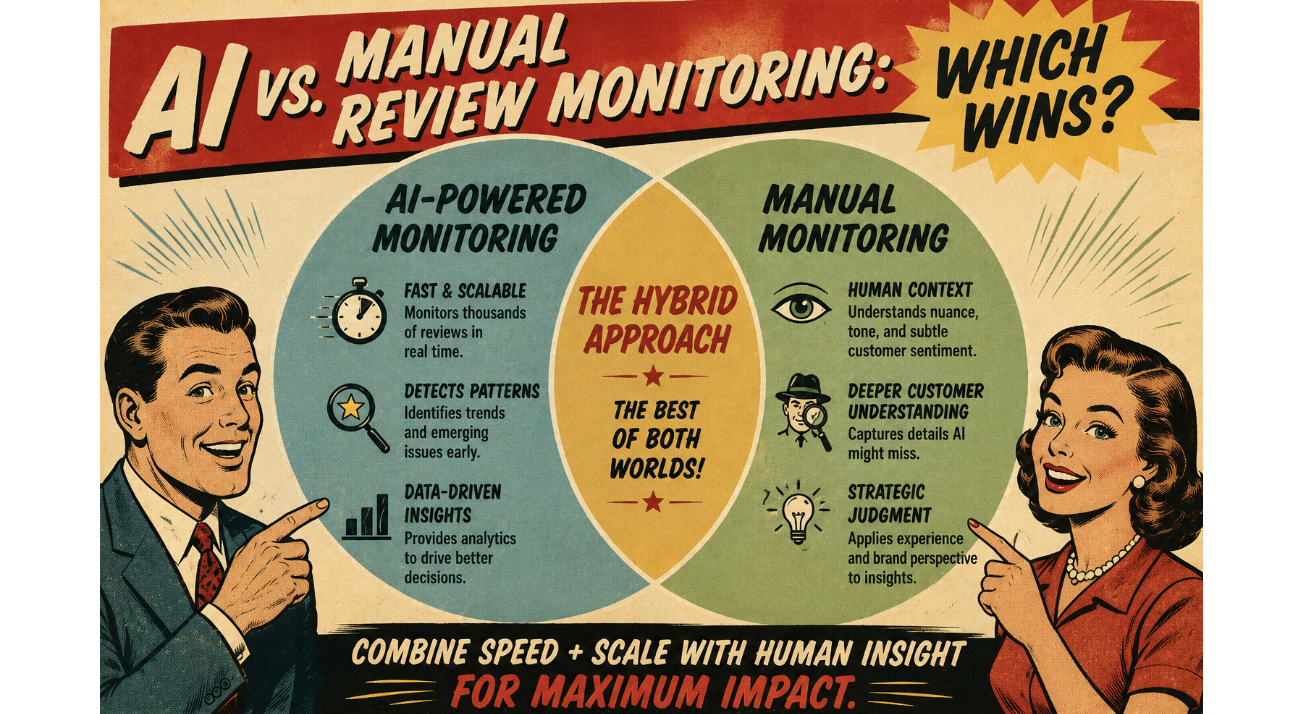
    AI vs. Manual Review Monitoring: Which Wins?

    Let’s face it, sifting through Amazon reviews can feel like panning for gold in a river of… well, let’s just say less-than-golden feedback. You’re looking for those legitimate concerns to improve your product, but you’re also wading through the occasional rant about the delivery driver or someone who clearly mistook your widget for a whozit.

    The question on every savvy seller’s mind lately is: can AI finally take some of this load off our shoulders? Specifically, is it “game over” for manual review monitoring now that GPT and other large language models are in the arena?

    Allure vs Reality

    The allure of letting an AI do the heavy lifting is strong. Imagine a tireless digital assistant that can instantly flag suspicious reviews, identify trends in customer sentiment, and even categorize feedback for product development. No more bleary eyes scanning endless text blocks!

    Tools leveraging AI can analyze the language used, identify patterns indicative of fake reviews (like repetitive phrasing or overly generic praise/criticism), and potentially even assess the emotional tone to detect inconsistencies.

    This can save you precious time and help you focus on actually acting on the feedback, rather than just finding it.

    However, before you fire your virtual review-reading intern (if you had one!), let’s pump the brakes a little. While AI is incredibly powerful, it’s not a perfect replacement for the human touch. Think of it like this: AI is a highly efficient sifter, but a human with experience knows the subtle glint of real gold versus fool’s gold.

    The Manual Advantage

    Here’s where the manual approach still holds significant weight:

    • Context is King: Humans excel at understanding context, nuance, and sarcasm – things that can still trip up even the most advanced AI. A seemingly negative review might actually contain valuable feedback delivered with a touch of humor that an AI could misinterpret.  
    • Evolving Tactics: The folks leaving illegitimate reviews are constantly evolving their tactics. What looks like a bot-generated review today might have a more human-like flair tomorrow. Humans can adapt and identify new patterns more quickly than an AI model that needs to be retrained.
    • Gut Feeling (Based on Experience): Sometimes, you just have a gut feeling about a review based on your deep understanding of your product and customer base. This intuition, honed over time, is something an algorithm can’t replicate.
    • Building Relationships: Engaging with genuine reviewers, even the critical ones, can build rapport and demonstrate your commitment to customer satisfaction. A canned AI response, while efficient, lacks that personal touch.  

    The Winning Strategy: A Hybrid Approach

    So, who wins? The answer, as is often the case, lies in the middle. The most effective review monitoring strategy leverages the strengths of both GPT and manual review.

    • Let GPT be your first line of defense: Use AI-powered tools to quickly scan and flag potentially suspicious reviews based on linguistic patterns and anomalies. This significantly reduces the initial workload.  
    • Human oversight is crucial: Experienced team members should then review the AI-flagged reviews to assess the context, identify subtle nuances, and make the final judgment on whether to escalate the review to Amazon.
    • Focus human efforts on genuine feedback: With the AI filtering out the noise, your team can dedicate more time to analyzing legitimate reviews, identifying areas for product improvement, and engaging with customers constructively.
    • Stay updated on AI capabilities: The technology is rapidly evolving. Keep an eye on new advancements in AI-powered review analysis tools and how they can further enhance your strategy.

    Think of GPT as your tireless, detail-oriented assistant, and your human team as the experienced detectives who can read between the lines. Together, they form a powerful force against illegitimate reviews and a valuable asset for understanding your customers.

    Get Rolling Today

    Are you spending too much time sifting through endless Amazon reviews? Discover how eCom Triage can help you implement a smart, hybrid review monitoring strategy to protect your reputation and focus on what truly matters: growing your business.

    Check out our services on our site, and see how we can help you supercharge your ecom business.

  • Our Review Analyzer GPT: Behind the Scenes

    Our Review Analyzer GPT: Behind the Scenes

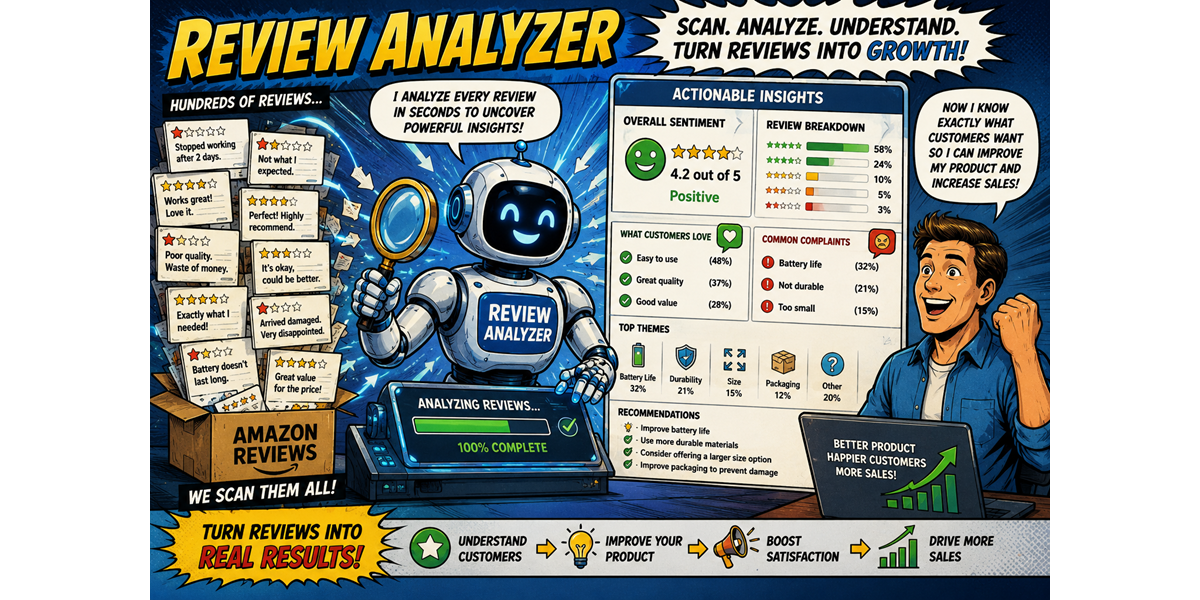
    At eCom Triage, our mission is to empower Amazon sellers by providing actionable solutions to their most pressing challenges. One of the tools we’ve developed to achieve this is our Review Analyzer GPT. This AI-powered tool is designed to help sellers quickly and efficiently understand the sentiment and key themes within their Amazon reviews, ultimately saving time and providing valuable insights for improvement and review removal efforts.

    Today, we’re pulling back the curtain to give you a glimpse behind the scenes of how this tool works and the thinking behind its creation.

    The Pain Point: Overwhelmed by Reviews

    For many Amazon sellers, especially those with a large number of listings and a high volume of reviews, keeping track of customer feedback can feel like drinking from a firehose. Manually reading and analyzing thousands or even hundreds of reviews is incredibly time-consuming and leads to missed insights. Sellers need a way to quickly identify trends, understand customer sentiment, and pinpoint reviews that might violate Amazon’s policies.

    The Birth of the Review Analyzer GPT: Our “Why”

    We recognized this significant pain point and saw the potential of leveraging Natural Language Processing (NLP) and Large Language Models (LLMs) to provide a solution. Our “why” was simple: to create a tool that would empower sellers to:

    • Save Time: Automate the initial analysis of reviews, freeing up valuable time for other critical tasks.
    • Gain Deeper Insights: Identify recurring themes, understand the nuances of customer sentiment beyond just star ratings, and uncover areas for product or service improvement.
    • Streamline Review Removal Efforts: Quickly pinpoint reviews that contain policy violations, making the reporting process more efficient.
    • Improve Customer Understanding: Develop a more nuanced understanding of what customers love and what frustrates them.

    How the Review Analyzer GPT Works: The “How”

    Our Review Analyzer GPT utilizes a combination of techniques to process and analyze Amazon reviews:

    1. Data Ingestion: Sellers can input review data in various formats, such as copying and pasting text, uploading CSV files, or potentially integrating directly with their Amazon Seller Central account (depending on future development).
    2. Natural Language Processing (NLP): At its core, the GPT employs NLP techniques to understand the meaning and context of the text within each review. This involves:
      • Tokenization: Breaking down the review text into individual words or “tokens.”
      • Part-of-Speech Tagging: Identifying the grammatical role of each word (e.g., noun, verb, adjective).
      • Sentiment Analysis: Determining the overall emotional tone of the review (positive, negative, or neutral) and the intensity of that sentiment.
      • Topic Modeling: Identifying the main subjects or themes discussed within the reviews.
    3. Large Language Model (LLM) Power (GPT): The integration of a powerful LLM like GPT allows the tool to go beyond basic sentiment analysis. It can:
      • Understand Context and Nuance: Recognize sarcasm, implied meanings, and complex sentence structures.
      • Identify Policy Violation Indicators: Be trained to recognize keywords, phrases, and patterns that are often associated with Amazon’s review policy violations (e.g., mentions of shipping if FBA is used, personal information, competitor mentions).
      • Summarize Key Findings: Condense large volumes of reviews into concise summaries highlighting the main positive and negative aspects and recurring themes.
      • Categorize Reviews: Group reviews based on specific product features, customer experiences, or potential policy violations.
    4. Output and Visualization: The Review Analyzer GPT presents the analyzed data in a user-friendly format, which might include:
      • Overall Sentiment Score: A numerical or graphical representation of the general sentiment towards the product.
      • Sentiment Breakdown: The percentage of positive, negative, and neutral reviews.
      • Key Themes and Topics: A list of the most frequently discussed topics within the reviews.
      • Example Quotes: Highlighted excerpts from reviews that illustrate different sentiments or recurring themes.
      • Potential Policy Violation Flags: Reviews that the AI identifies as potentially violating Amazon’s policies, along with the reasons for the flag.

    Behind the Training: Feeding the Beast

    The effectiveness of our Review Analyzer GPT relies heavily on the data it’s trained on. Our training process involves:

    • Large Datasets of Amazon Reviews: We utilize vast amounts of publicly available Amazon review data to train the model on the nuances of customer language and sentiment in this specific context.
    • Amazon’s Review Policies: We specifically train the model on Amazon’s Community Guidelines and Customer Product Reviews Policies to help it identify potential violations.
    • Human Expertise: Our team of Amazon experts provides valuable input to refine the model’s accuracy and ensure it aligns with the practical needs of sellers. This includes labeling data, providing feedback on the model’s performance, and guiding its development.
    • Iterative Improvement: Like any AI model, our Review Analyzer GPT is constantly being refined and improved based on user feedback and ongoing testing. We continuously monitor its performance and update its training data to enhance its accuracy and capabilities.

    Our Vision for the Future

    We see the Review Analyzer GPT as an evolving tool that will continue to provide increasing value to Amazon sellers. Our future development plans may include:

    • Direct Integration with Seller Central: Streamlining the data input process.
    • More Granular Sentiment Analysis: Identifying specific aspects of the product or service that are driving positive or negative feedback.
    • Automated Reporting to Amazon: Simplifying the process of reporting policy-violating reviews.
    • Competitive Analysis: Allowing sellers to analyze reviews of their competitors to identify opportunities and threats.

    Empowering Sellers with Insights

    The eCom Triage Review Analyzer GPT is more than just a piece of technology; it’s a tool designed to empower Amazon sellers with the knowledge they need to make informed decisions, improve their products and services, and protect their brand reputation. By providing a clear and efficient way to understand customer feedback, we aim to help sellers turn reviews from a daunting task into a valuable source of insights and a catalyst for growth.

    The Power of Insight

    Ready to unlock the power of your Amazon reviews? Learn more about the eCom Triage Review Analyzer GPT and how it can help you save time, gain valuable insights, and streamline your review management process.

    Contact us for a demo or to learn about early access opportunities.

  • How AI Can Help You Spot TOS Violations (AI & Automation for Amazon Sellers)

    How AI Can Help You Spot TOS Violations (AI & Automation for Amazon Sellers)

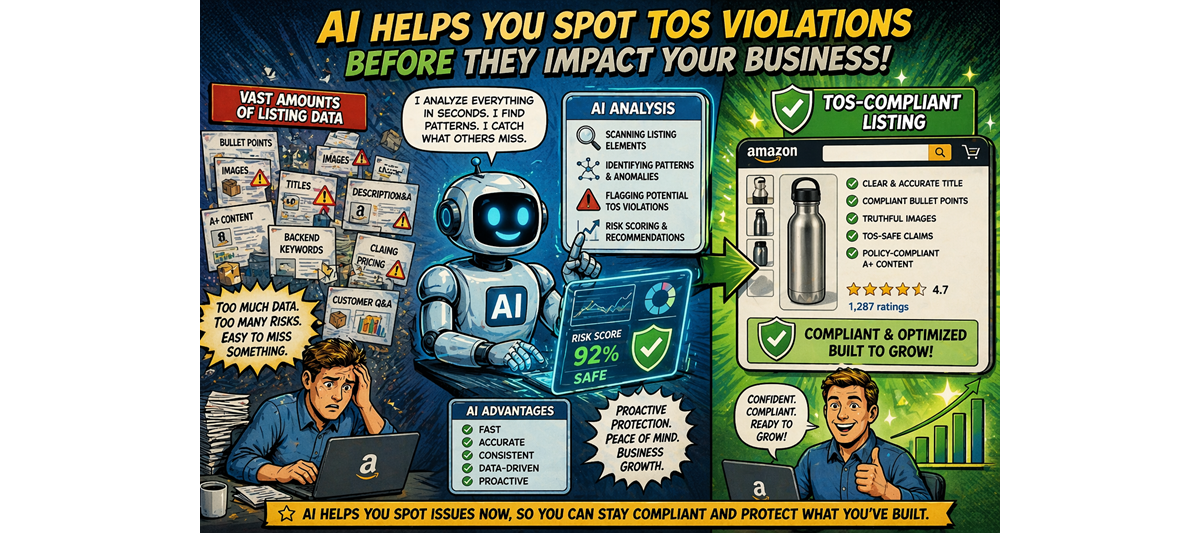
    Staying compliant with Amazon’s ever-evolving Terms of Service (TOS) is a constant challenge for sellers. Violations can lead to listing suspensions, account warnings, or even permanent bans. Manually sifting through Amazon’s lengthy and often complex guidelines is time-consuming and prone to human error. This is where the power of Artificial Intelligence (AI) can be a game-changer, helping you proactively identify potential TOS violations before they impact your business.

    The Growing Complexity of Amazon’s TOS

    Amazon’s policies are in place to ensure a fair and safe marketplace for both buyers and sellers. However, these guidelines are frequently updated, and interpreting them correctly can be difficult. What might have been acceptable a few months ago could now be a violation.

    Keeping track of all the nuances across different product categories and policy sections is a significant burden for any seller.

    How AI Can Be Your Compliance Ally

    AI-powered tools are designed to analyze vast amounts of data quickly and efficiently, identifying patterns and anomalies that a human might miss.

    Here’s how AI can help you spot potential TOS violations:

    • Listing Content Analysis: AI algorithms can analyze your product titles, bullet points, descriptions, and backend keywords for prohibited terms, inaccurate claims, or potentially misleading information that could violate Amazon’s guidelines. For example, AI can flag phrases that make unsubstantiated health claims or use competitor brand names inappropriately.
    • Image Compliance Checks: AI can be trained to identify images that violate Amazon’s image requirements, such as those with non-white backgrounds (for main images), excessive text overlays, or the inclusion of prohibited elements like logos or promotional badges.
    • Review Analysis for Policy Breaches: AI can analyze customer reviews for potential TOS violations that you might have inadvertently triggered. For instance, it can flag reviews mentioning incentivized feedback (if you engaged in such practices, which are against TOS) or highlight product issues that might indicate a safety concern requiring attention.
    • Competitor Analysis for Potential Red Flags: AI can monitor your competitors’ listings and flag any potentially non-compliant content or practices they might be using. While this doesn’t directly address your own violations, it can provide insights into areas where Amazon is actively enforcing its policies.
    • Policy Change Monitoring: Some advanced AI tools can even track updates to Amazon’s TOS and alert you to changes that might affect your listings or business practices. This proactive approach can help you stay ahead of the curve and avoid unintentional violations.

    Benefits of Using AI for TOS Compliance

    • Increased Accuracy: AI algorithms can analyze text and images with a high degree of accuracy, reducing the risk of human error in interpreting complex policies.
    • Improved Efficiency: AI can automate the process of reviewing your listings and customer feedback, saving you significant time and effort compared to manual checks.
    • Proactive Risk Mitigation: By identifying potential violations early, AI helps you take corrective action before Amazon flags your listings or issues warnings, minimizing the risk of suspensions or account issues.
    • Scalability: As your product catalog grows, manually ensuring compliance becomes increasingly challenging. AI-powered tools can scale with your business, providing consistent monitoring across all your listings.
    • Staying Up-to-Date: AI can help you keep pace with Amazon’s frequent policy updates, ensuring your listings remain compliant as the rules evolve.

    Examples of AI in Action for TOS Compliance

    • An AI tool might flag a product title that includes a claim like “the best” without proper substantiation.
    • AI could identify a main product image that has a watermark or includes a promotional banner.
    • An AI-powered review analysis tool might highlight a customer review that mentions receiving a discount in exchange for their feedback, alerting you to a potential policy violation if you engage in such a practice.

    Choosing the Right AI Tools

    When selecting AI tools for TOS compliance, consider the following:

    • Specific Features: Does the tool offer the specific features you need, such as listing content analysis, image checks, or review analysis?
    • Accuracy and Reliability: Research the tool’s accuracy and reliability through reviews and case studies.
    • Integration with Amazon Seller Central: Seamless integration can streamline your workflow.
    • Ease of Use: The tool should be user-friendly and provide clear and actionable insights.
    • Cost-Effectiveness: Evaluate the pricing structure and ensure it aligns with your budget and the value it provides.

    Important Considerations

    While AI is a powerful tool, it’s not a substitute for your own understanding of Amazon’s TOS. Always review the AI-generated insights and make informed decisions. Stay updated on Amazon’s official policy announcements and use AI as an aid to enhance your compliance efforts.

    Next Steps

    Are you relying solely on manual checks to ensure your listings comply with Amazon’s ever-changing TOS? Leverage the power of AI to proactively identify and address potential violations before they impact your business.

    Explore how AI-driven solutions can safeguard your Amazon presence. Contact us:

    Schedule a Call

  • What Amazon Sellers Need to Know About AI Tools

    What Amazon Sellers Need to Know About AI Tools

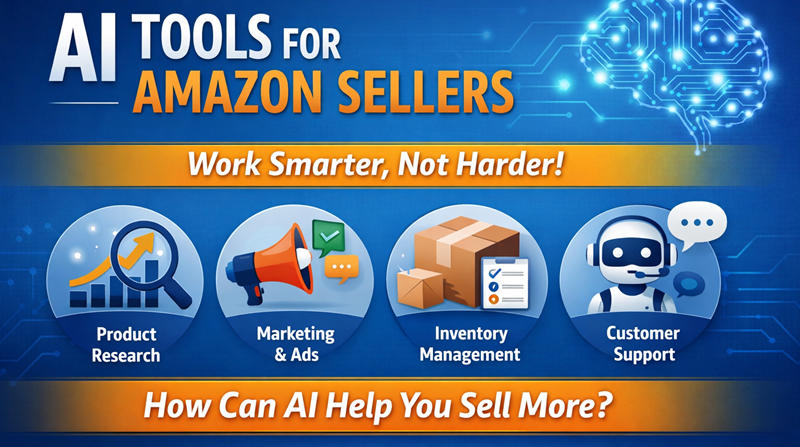
    AI is revolutionizing the eCommerce space, and Amazon sellers are in a unique position to leverage tools like ChatGPT and others for efficiency and growth. But what exactly can AI tools do for sellers, and how can you start using them?

    The Role of AI in eCommerce

    AI-powered tools can be used for a wide range of tasks, from customer service automation to product research and content creation. AI tools can help sellers:

    • Generate Product Listings: AI can help you create well-optimized product listings in bulk. It can analyze keywords, competitor listings, and customer reviews to craft product descriptions and bullet points that are more likely to convert.
    • Customer Support Automation: With AI, sellers can automate responses to customer inquiries, making it easier to handle large volumes of messages while maintaining a personal touch.
    • Market Research: AI can help generate insights into market trends, competitor strategies, and potential keywords, saving sellers time on research.

    The Takeaway

    Making use of AI tools can help Amazon sellers work smarter, not harder. The key is using AI to augment — not replace — the human elements that make your business unique. Human oversight is vital.

    While AI can handle repetitive tasks, it’s essential to focus on building genuine customer relationships and delivering high-quality products.

    Get in touch and see how we can help. Our team here at eCom Triage is standing by with answers.

    Contact Us at eCom Triage

  • Amazon Agencies: Is AI-Driven Account Monitoring a Convenience or a Necessity

    Amazon Agencies: Is AI-Driven Account Monitoring a Convenience or a Necessity

    Amazon agencies have long faced and managed the complexities of managing thousands of SKUs and multiple clients. I believe that the need for effective account monitoring tools has never been greater. Amazon has become more complicated, added more rules and made more changes that could negatively impact sellers. Traditional systems, while useful for individual sellers, often fall short at the agency level. Suppressed listings, orphaned ASINs (and reviews), shifts in review sentiment can erode client trust and impact profitability if not addressed promptly. Thankfully, artificial intelligence (AI) is transforming how agencies tackle these challenges.

    Simon Ellicott recently highlighted this shift in his insightful post, “ACCOUNT MONITORING: Why AI Driven Solutions are the Future for Amazon Agencies in 2025.” Simon underscores the pressing need for AI-driven tools tailored to agency-specific needs, emphasizing their potential to revolutionize account monitoring. His perspective perfectly aligns with why Marc Pfeiffer and I created Catalog Defender: to provide Amazon agencies with a simple, intelligent solution designed to be scaled to thousands of ASINs and brands. The intention is to streamline the detection and notification system to allow agencies to become proactive in the management of their client’s brands.

    The Challenges of Traditional Monitoring Tools for Agencies

    Traditional account monitoring solutions often fall into two categories:

    1. Overpriced and Underwhelming: Tools built for individual sellers struggle to handle the scale of agency operations without becoming prohibitively expensive.
    2. Alert fatigue: Many tools flag and notify you of SO MANY issues that you get fatigued and just ignore them. When a major issue occurs, it just blends in with the rest
    3. Reactive, Not Proactive: Most tools only alert you of the issue and that’s that. There is no database of knowledge or links to a partner that can help with the resolution

    For agencies managing multiple clients, these limitations result in inefficiencies and the risk of clients noticing problems before the agency does. As Simon aptly put it, this gap can undermine an agency’s value proposition.

    AI-Powered Solutions: A Game Changer

    AI offers a smarter, scalable approach to account monitoring. Here’s how:

    • Real-Time Alerts: AI systems like Catalog Defender monitor vast datasets across multiple accounts, flagging issues such as suppressed listings or price discrepancies in real time. This ensures agencies stay ahead of potential problems.
    • Efficiency and Cost-Effectiveness: By automating these routine tasks, AI reduces the need for manual oversight, allowing account managers to focus on strategic initiatives. This not only lowers operational costs but also increases client satisfaction.
    • Proactive Risk Mitigation: Imagine a system that detects issues and every day your team has a punch list of issues to resolve. That’s Catalog Defender.

    Catalog Defender: Designed for Amazon Agencies

    When Marc and I developed Catalog Defender, we had one goal: to empower Amazon agencies with an AI-driven tool built for their unique challenges. Unlike traditional systems, Catalog Defender scales seamlessly across multiple accounts, providing tailored alerts and actionable insights. Our focus on proactive management ensures that agencies are always one step ahead, delivering exceptional service to their clients.

    Closing Thoughts

    AI is no longer a nice-to-have; it’s a necessity for Amazon agencies striving to stay competitive in 2025 and beyond. As Simon Ellicott pointed out, the shift toward AI-driven account monitoring is fueled by the need for efficiency and risk mitigation. Catalog Defender embodies this transformation, offering a powerful solution to the challenges agencies face today.

    To learn more about how Catalog Defender can revolutionize your agency’s account monitoring, get in touch with us. Together, we can build a future where your team’s value proposition is undeniable.