• Amazon Steps Up Fight Against Fake Reviews After UK Watchdog Investigation

    Amazon Steps Up Fight Against Fake Reviews After UK Watchdog Investigation

    Amazon has pledged to intensify its efforts to combat fake reviews on its platform following a four-year investigation by the UK’s Competition and Markets Authority (CMA). The tech giant will implement measures including sanctioning British businesses that use fraudulent posts to enhance their ratings and banning users who repeatedly submit fake reviews. The agreement also addresses ‘catalog abuse,’ where sellers misuse reviews from unrelated top-performing products to deceive customers. These commitments aim to strengthen Amazon’s detection and removal processes for inauthentic reviews.

    What This Means for E-Commerce Sellers

    I have mixed feelings on this. 

    On the one hand, review manipulation SHOULD be quelled and those guilty of it should be reprimanded. Not all sellers do it to manipulate the system, some feel that they HAVE to do it in order to even be able to make a sale. Does that make it right? No.

    On the other hand, I believe that the hammer will only drop harder on those deemed guilty of review manipulation. Just because Amazon says you’re guilty doesn’t mean you are… For e-commerce businesses it is of even greater importance you maintain authentic customer reviews. I know of several companies out there that can get your reviews, it’s playing with fire in my opinion.

    Sellers should review their current practices to ensure compliance with the new guidelines. This includes refraining from incentivizing reviews, ensuring that product listings accurately represent the items being sold, and monitoring for any unauthorized or suspicious review activity

    Steps to Ensure Compliance

    1. Audit Your Reviews: Regularly monitor your product reviews for any signs of inauthenticity or manipulation.
    2. Avoid Incentivizing Reviews: Do not offer discounts, free products, or other incentives in exchange for positive reviews.
    3. Educate Your Team: Ensure that all members of your team understand the importance of authentic reviews and the potential consequences of non-compliance.
    4. Report Suspicious Activity: If you notice any suspicious review activity on your products, report it to Amazon promptly.

    By adhering to these practices, e-commerce sellers can maintain the integrity of their product listings and build trust with consumers.

    Conclusion

    Amazon’s commitment to combating fake reviews marks a significant step toward ensuring a fair and transparent e-commerce environment. For sellers, this is a timely reminder to prioritize authenticity and compliance in all aspects of their operations. Staying informed about regulatory changes and proactively addressing potential issues will be key to long-term success in the evolving digital marketplace.

    Sources:
    theguardian.com+7usnews.com+7uk.news.yahoo.com+7
    techxplore.com+20gov.uk+20reuters.com+20

  • Stop Being Ignored By Amazon Support: Grab This FREE Guide

    Stop Being Ignored By Amazon Support: Grab This FREE Guide

    Let’s be real – we’ve all been there. Critical listing issues suddenly appear, inventory gets stuck in limbo, or your account faces mysterious restrictions. And what does Seller Support offer? 

    Another useless copy-paste response that has nothing to do with your actual problem, while your sales and metrics continue to suffer.

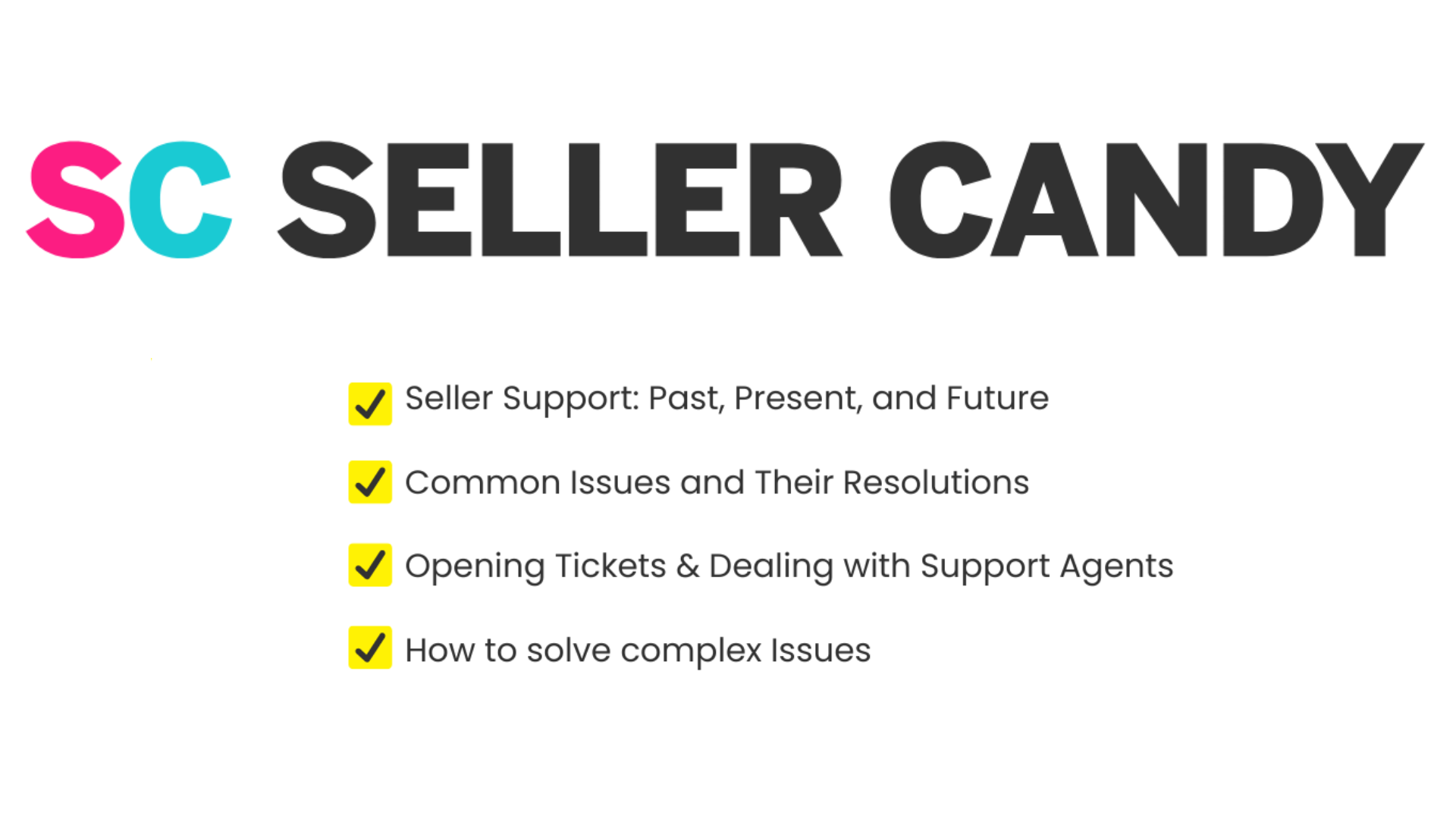
    This week, we’re sharing a game-changer from our friends at Seller Candy. After handling 10,000+ support cases over 5 years, they’ve created the Technical Problem Solver’s Guide to Amazon Seller Central with solutions that actually work.

    Inside you’ll find:

    ➨ Case structures that get routed to the right team immediately

    ➨ Strategic escalation protocols that get results

    ➨ “Magic phrases” that get urgent issues addressed

    Don’t waste hours fighting the system. Keep this FREE guide handy as your emergency toolkit for when Amazon throws a curveball your way.

    A Technical Problem Solvers Guide to Amazon Seller Central 1 3 1
  • Amazon Agencies: Is AI-Driven Account Monitoring a Convenience or a Necessity

    Amazon Agencies: Is AI-Driven Account Monitoring a Convenience or a Necessity

    Amazon agencies have long faced and managed the complexities of managing thousands of SKUs and multiple clients. I believe that the need for effective account monitoring tools has never been greater. Amazon has become more complicated, added more rules and made more changes that could negatively impact sellers. Traditional systems, while useful for individual sellers, often fall short at the agency level. Suppressed listings, orphaned ASINs (and reviews), shifts in review sentiment can erode client trust and impact profitability if not addressed promptly. Thankfully, artificial intelligence (AI) is transforming how agencies tackle these challenges.

    Simon Ellicott recently highlighted this shift in his insightful post, “ACCOUNT MONITORING: Why AI Driven Solutions are the Future for Amazon Agencies in 2025.” Simon underscores the pressing need for AI-driven tools tailored to agency-specific needs, emphasizing their potential to revolutionize account monitoring. His perspective perfectly aligns with why Marc Pfeiffer and I created Catalog Defender: to provide Amazon agencies with a simple, intelligent solution designed to be scaled to thousands of ASINs and brands. The intention is to streamline the detection and notification system to allow agencies to become proactive in the management of their client’s brands.

    The Challenges of Traditional Monitoring Tools for Agencies

    Traditional account monitoring solutions often fall into two categories:

    1. Overpriced and Underwhelming: Tools built for individual sellers struggle to handle the scale of agency operations without becoming prohibitively expensive.
    2. Alert fatigue: Many tools flag and notify you of SO MANY issues that you get fatigued and just ignore them. When a major issue occurs, it just blends in with the rest
    3. Reactive, Not Proactive: Most tools only alert you of the issue and that’s that. There is no database of knowledge or links to a partner that can help with the resolution

    For agencies managing multiple clients, these limitations result in inefficiencies and the risk of clients noticing problems before the agency does. As Simon aptly put it, this gap can undermine an agency’s value proposition.

    AI-Powered Solutions: A Game Changer

    AI offers a smarter, scalable approach to account monitoring. Here’s how:

    • Real-Time Alerts: AI systems like Catalog Defender monitor vast datasets across multiple accounts, flagging issues such as suppressed listings or price discrepancies in real time. This ensures agencies stay ahead of potential problems.
    • Efficiency and Cost-Effectiveness: By automating these routine tasks, AI reduces the need for manual oversight, allowing account managers to focus on strategic initiatives. This not only lowers operational costs but also increases client satisfaction.
    • Proactive Risk Mitigation: Imagine a system that detects issues and every day your team has a punch list of issues to resolve. That’s Catalog Defender.

    Catalog Defender: Designed for Amazon Agencies

    When Marc and I developed Catalog Defender, we had one goal: to empower Amazon agencies with an AI-driven tool built for their unique challenges. Unlike traditional systems, Catalog Defender scales seamlessly across multiple accounts, providing tailored alerts and actionable insights. Our focus on proactive management ensures that agencies are always one step ahead, delivering exceptional service to their clients.

    Closing Thoughts

    AI is no longer a nice-to-have; it’s a necessity for Amazon agencies striving to stay competitive in 2025 and beyond. As Simon Ellicott pointed out, the shift toward AI-driven account monitoring is fueled by the need for efficiency and risk mitigation. Catalog Defender embodies this transformation, offering a powerful solution to the challenges agencies face today.

    To learn more about how Catalog Defender can revolutionize your agency’s account monitoring, get in touch with us. Together, we can build a future where your team’s value proposition is undeniable.

  • Intuit and Amazon Partner Up

    Intuit and Amazon Partner Up

    Great news this week in the world of e-commerce.  Another partnership has been announced, and this one will create waves (good waves) across the industry.

    The kind of waves that will add positive energy to the system.

    What Happened

    Intuit and Amazon have announced a multi-year strategic partnership to help Amazon sellers better manage their finances, access capital, and grow their businesses.

    Let’s be honest though, the main thing that matters (at least to me) is that Amazon will directly integrate with Quickbooks. 

    This collaboration (coming mid-2025)  focuses on providing sellers with tools and insights to improve profitability, cash flow, and tax compliance—all essential for scaling in the competitive e-commerce space.

    What It Means for Sellers

    First and foremost this will be a boon for those who sell on Amazon.

    The new partnership means:

    • Integration with Amazon Seller Central
      QuickBooks will be integrated directly into Amazon Seller Central as the preferred financial management solution, giving sellers easy access to tools that streamline their operations.
    • AI-Driven Insights
      Amazon sellers will gain access to financial insights like profitability tracking, cash flow analysis, and tax liability estimates, powered by Intuit’s advanced AI platform.

    Why It Matters for All E-Commerce Businesses

    This partnership highlights the growing importance of integrated financial tools for e-commerce sellers. By adopting platforms like QuickBooks, sellers can save time, make informed financial decisions, and confidently grow their businesses.

    Among the key benefits will be comprehensive financial management, and simplified access to capital.

    How Does It Affect Existing Finance Service Businesses?

    ConnectBooks | Shopkeeper | Finaloop

    They all have something to offer in this space. I’m only personally familiar with ConnectBooks. I think that there will always be a place for them but that they are going to need to pivot.

    Closing Thoughts

    It doesn’t matter if you do anything at scale. Shipping, finance, product sales, metrics, Amazon wants it ALL. Eventually they’re going to offer every solution those of us pioneered, but they will NEVER be able to do it as well as we can.

    References:

  • Understanding the Amazon Review Algorithm

    Understanding the Amazon Review Algorithm

    This is a collection of my thoughts on the factors that influence Amazon’s rating system.

    It’s a frank discussion, coming from my years of experience. Some of it is based on data provided by Amazon, some of it is an educated guess based on observation, some is pure conjecture. I have a lot more data on this, but for brevity I have stayed out of the weeds on some of the explanations. Despite what I’ve written here, I believe it likely that there are more factors that I have not gone over in this… If you have ideas on what those could be, I’d love to hear them!

    Here are some of the factors that we KNOW impact the rating of your product:

    Recent Reviews

    Amazon specifically states that they assign more significance to the most recent reviews. This is due to the assumption that recent reviews reflect the most current state of the product. Therefore, if you get slammed with a bunch of negative reviews, I believe that it can drop your rating much faster than it should mathematically equate to.

    If your most recent reviews have lower ratings, I think Amazon sees this as a product rapidly trending DOWN or that there is some sort of issue with it.

    I’ve seen many instances of a product having had a 4.3 rating for not just months, but YEARS, then suddenly be strategically hit with a blast of negative ratings and reviews, causing it to drop from a 4.3 to a 4.2 average star rating.

    Time Decay

    If newer reviews hold more weight than older reviews, then you could postulate that reviews gradually contribute less and less weight to the overall rating as time marches on. This would ensure that the star rating reflects the product’s current performance.

    With that said, I also think that if you have a long history of having a high ratings Amazon takes that into account as well.

    Verified Purchases

    Reviews from verified purchasers are considered more trustworthy. That doesn’t mean an unverified review has no impact, just that Amazon claims it does not hold as much weight.

    That being said, I’ve seen evidence to the contrary.

    What I think, therefore, is that the lower the number of reviews, the higher the impact of an unverified review because there’s not as much content to overcome its value.

    Reviewer Credibility and Quality Scores

    A few comments on this follow.

    Quality of Review Content

    Reviews that are detailed, well-written, and deemed helpful by other users can carry more weight. In the case of Google, they’ve gamified the review system.

    • If you’ve got at least 200 characters in the review, it’s considered a well written review.
    • If you add photos, you get more points.
    • If you add LOTS of photos, have a really long review with great detail, and you add video, you can seriously rack up some points.

    I actually think that gamifying the review system would be in the best interest of Amazon, the seller AND the buyer.

    Keywords

    Keywords play a factor in reviews. This is how Dufus is aggregating the data and giving a synopsis of what people do and don’t like. This is of course a two way street when it comes to positive and negative reviews. Unfortunately, this is where fraud really comes into play… In suspicious and fraudulent reviews, I VERY often see alarming statements, usually in all capital letters: 

    • DO NOT BUY
    • BUYER BEWARE
    • DANGEROUS
    • HORRIBLE
    • BROKEN
    • Et cetera

    This means that if a competitor wanted to smack you down in the ranking, they can have a bunch of buyer accounts buy your product and leave a bunch of reviews stuffed with specific keywords to alarm Amazon’s algorithm.

    Reviewer Social Score

    I believe that buyer accounts who consistently provide write reviews may have their ratings and reviews weighted more significantly than others who only leave star ratings or occasionally write reviews.

    I have nothing to substantiate this, I am making an educated guess based on the fact that they consider the most recent reviews to have more weight. So if you have an account that leaves reviews with lots of well written content, those reviews will hold more weight.

    This means that if a buyer account has a bunch of well written low-star reviews, it can lower the average rating more quickly than a buyer account that has only ever left 3 reviews.

    Suspicious or Fraudulent Activity

    You would think that Amazon’s algorithm would “downweight” or exclude reviews that were suspected of being fake or biased. But I have seen so many instances of accounts where all evidence points to them being fraudulent accounts, yet no action is taken against those reviews or the buyer account. Some of the things that YOU should be looking for are:

    • The buyer account
      • What do the reviews look like from that account? Are they primarily good or bad? Are they ALL good or bad?
      • How often does the account leave reviews
      • Has the buyer account left critical reviews on all of your competitors except one? \
    • Your account
      • Have you had a sudden blast of negative reviews? Did your rating just drop and suddenly the negative reviews coming just stopped?
      • Do you see similarities between the reviews that have been coming in? Same image in the review? Same claims? Same EXACT text?

    In Closing

    I believe this is a topic high on the minds of Amazon sellers in particular, and now eCommerce entrepreneurs in general since the FTC has officially made it illegal to acquire or promote fake reviews and testimonials.

    As a long-time Amazon seller and entrepreneur myself, with years of additional experience as an owner and executive at several third-party companies dedicated to providing services and software to help Amazon sellers succeed, I felt it was time to share my thoughts in a format like this.

    Amazon keeps a lot of secrets. This we know. But there are many of us, and we observe things, we learn things, and as we learn I believe it’s important we share, discuss, and learn even more.

    Hit me up with your own observations or any questions.