
How One 1-Star Review Can Tank Your Sales
That dreaded notification pops up – a new 1-star review. Your stomach drops. It’s just one review, right? Can it really do that much damage? The short answer, unfortunately, is a resounding Yes. In the hyper-competitive world of Amazon, even a single negative review can have a disproportionately large impact on your sales and overall business health.
Let’s dive into why and, more importantly, what you can do about it.
First Impressions
Think of your Amazon listing as a digital storefront. Shoppers can’t physically interact with your product, so they rely heavily on social proof – and reviews are the cornerstone of that proof. A stream of positive feedback builds trust and encourages conversions. Conversely, a glaring 1-star review acts like a red flag, deterring potential customers and sowing seeds of doubt.
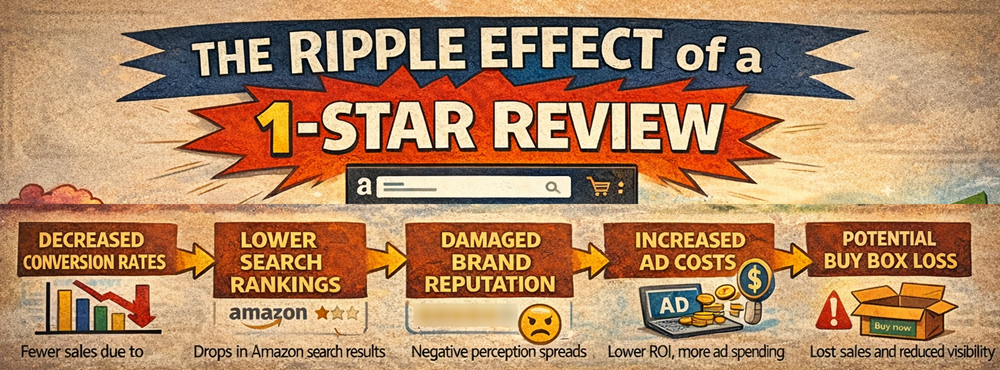
The Domino Effect of a Negative Review:
- Reduced Conversion Rates: Potential buyers are naturally risk-averse. Seeing a negative review, especially if it highlights a significant flaw or poor experience, will make them think twice before clicking “Add to Cart.” They’ll likely browse competitor listings with more positive feedback. Even if your overall star rating remains relatively high, that single negative comment can stick in a buyer’s mind.
- Lowered Visibility in Search Results: Amazon’s algorithm prioritizes listings with strong sales velocity and positive customer feedback. A dip in your conversion rate due to a negative review can signal to Amazon that your product is no longer as appealing, leading to lower organic rankings. This creates a vicious cycle: fewer eyes on your listing mean fewer potential sales, further impacting your ranking.
- Damage to Brand Reputation: For sellers building a brand beyond just a single product, negative reviews can tarnish your overall reputation. Customers may associate that poor experience with your entire product line, making them hesitant to purchase other items you offer. This is particularly true if the review highlights issues with customer service or product quality consistency.
- Increased Advertising Costs: To compensate for lower organic traffic and conversion rates, you might feel pressured to increase your advertising spend. However, driving more traffic to a listing with a prominent negative review can be like pouring water into a leaky bucket. You’re paying for clicks from customers who are immediately turned off by the negative feedback.
- Impact on Buy Box Share: While numerous factors influence Buy Box eligibility, customer satisfaction is a significant one. A sudden influx of negative reviews can negatively impact your seller metrics, potentially leading to a loss of Buy Box share, further hindering sales.
Why a One-Star Review Carries So Much Weight:
- The Power of Recency: Amazon often highlights the most recent reviews. A new 1-star review will likely be one of the first things potential buyers see, making its impact even more significant.
- The Outlier Effect: If the vast majority of your reviews are positive, a single negative one can stand out starkly, drawing more attention to the perceived flaw.
- Emotional Impact: Negative experiences tend to be more emotionally charged and memorable for customers. They are also often more vocal about their dissatisfaction.
What Can You Do?
While you can’t magically erase negative feedback, you can take proactive steps to mitigate its impact and prevent future occurrences:
- Monitor Your Reviews Diligently: Don’t wait for sales to plummet to check your reviews. Set up alerts or regularly check your listings to identify negative feedback as soon as it appears.
- Respond Professionally and Promptly: A thoughtful and professional response to a negative review shows potential customers that you care about their experience. Acknowledge their concerns, apologize for any shortcomings, and offer a solution if appropriate (e.g., a refund, replacement, or explanation). This can sometimes even lead to the reviewer updating or removing their feedback.
- Analyze the Feedback: Don’t just dismiss a 1-star review. Carefully analyze the content. Is it a legitimate product defect, a misunderstanding of the product features, or an issue with shipping (which you might be able to address with Amazon)? Identifying the root cause is crucial for preventing similar issues in the future.
- Improve Your Product and Processes: Use negative feedback as valuable data. If multiple reviewers mention the same problem, it’s a clear indication that you need to improve your product, packaging, instructions, or customer service processes.
- Proactively Solicit Positive Reviews (Compliantly): While you can’t incentivize positive reviews, you can implement strategies to encourage satisfied customers to leave feedback. This could include follow-up emails (within Amazon’s guidelines) or using Amazon’s Request a Review button. A higher volume of positive reviews can help to dilute the impact of a single negative one over time.
- Consider Review Removal (When Appropriate): If a review violates Amazon’s Community Guidelines (e.g., contains abusive language, personal information, or clearly isn’t about the product), you can report it to Amazon for removal.
Are you proactively monitoring your Amazon reviews and have a strategy in place to address negative feedback? Don’t let a single 1-star review derail your hard work.
If you’re looking for expert guidance on building a robust review strategy and protecting your listing’s reputation, schedule a call today: