• What Amazon Sellers Need to Know About AI Tools

    What Amazon Sellers Need to Know About AI Tools

    AI is revolutionizing the eCommerce space, and Amazon sellers are in a unique position to leverage tools like ChatGPT and others for efficiency and growth. But what exactly can AI tools do for sellers, and how can you start using them?

    The Role of AI in eCommerce

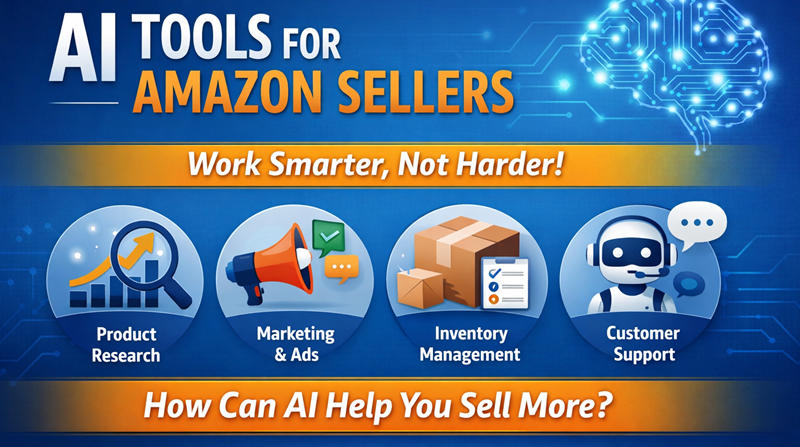
    AI-powered tools can be used for a wide range of tasks, from customer service automation to product research and content creation. AI tools can help sellers:

    • Generate Product Listings: AI can help you create well-optimized product listings in bulk. It can analyze keywords, competitor listings, and customer reviews to craft product descriptions and bullet points that are more likely to convert.
    • Customer Support Automation: With AI, sellers can automate responses to customer inquiries, making it easier to handle large volumes of messages while maintaining a personal touch.
    • Market Research: AI can help generate insights into market trends, competitor strategies, and potential keywords, saving sellers time on research.

    The Takeaway

    Making use of AI tools can help Amazon sellers work smarter, not harder. The key is using AI to augment — not replace — the human elements that make your business unique. Human oversight is vital.

    While AI can handle repetitive tasks, it’s essential to focus on building genuine customer relationships and delivering high-quality products.

    Get in touch and see how we can help. Our team here at eCom Triage is standing by with answers.

    Contact Us at eCom Triage

  • 20+ Critical ASIN Issues Amazon Doesn’t Tell You About

    20+ Critical ASIN Issues Amazon Doesn’t Tell You About

    Amazon’s selling environment is dynamic, which means staying on top of catalog health is more important than ever. Did you know there are over 20 critical ASIN issues that Amazon doesn’t actively notify sellers about?

    Here’s what you need to watch for to ensure your ASINs are healthy.

    1. Inaccurate Product Listings

    If your product listings contain incorrect information (even if it’s not intentional), Amazon may suppress your listings or remove them entirely. Errors like wrong images, incorrect variations, or incomplete descriptions can result in a poor customer experience and even policy violations.

    2. Variation Problems

    Having multiple variations (size, color, etc.) for a single product is common, but if you don’t properly set up these variations, Amazon could merge your listings incorrectly, resulting in a cluttered catalog or confusion for customers.

    3. Product Detail Page Issues

    Missing key details or improperly optimized fields on your product detail page (like keywords or bullet points) can negatively affect your rankings, leading to less visibility and sales.

    4. Non-compliant Reviews

    Amazon flags reviews for policy violations, and sometimes these are connected to specific ASINs. If these reviews are not dealt with swiftly, they can damage your product’s reputation.

    5. FBA and Fulfillment Issues

    Even if your ASIN is eligible for FBA (Fulfilled by Amazon), if there’s a mismatch with your fulfillment settings or inventory count, it could impact your listing’s visibility and sales.

    6. Catalog Health and Performance Metrics

    Amazon will take down ASINs that consistently underperform on metrics like customer returns, out-of-stock statuses, or poor seller performance. It’s important to monitor your ASINs for these indicators.

    The Takeaway

    Catalog health is often overlooked until something goes wrong, but by monitoring and resolving these issues proactively, you can keep your listings competitive and compliant.

    Tools like eCom Triage’s Catalog Defender can help you track these critical issues before they escalate, ensuring your ASINs stay healthy and profitable.

  • How Amazon Calculates Star Ratings (and why it’s broken)

    How Amazon Calculates Star Ratings (and why it’s broken)

    Your star-rating impacts visibility, conversion rates, and sales. What you might not know is that Amazon’s method for calculating star ratings is far from perfect. Here’s a breakdown of how it works, and why it’s broken.

    How Amazon Calculates Star Ratings

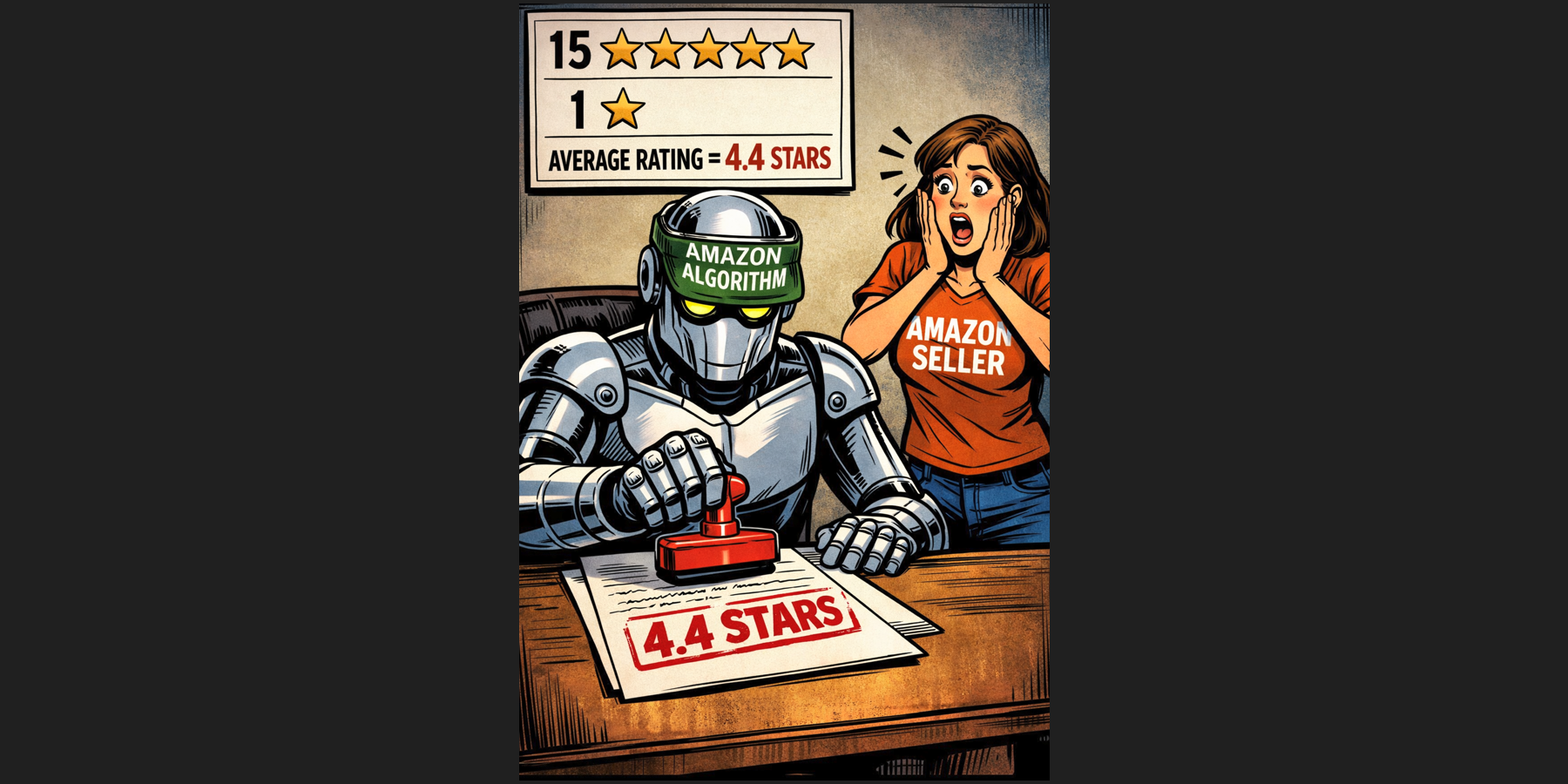
    Amazon uses an algorithm to calculate your product’s average star rating. You’d think it’s the sum of all ratings divided by the total number of reviews, right? Not quite.

    Here’s how it works.

    • Weighting of Reviews: Amazon’s algorithm doesn’t treat all reviews equally. Recent reviews carry more weight than older ones. So keep doing everything you can to drive positive reviews.
    • Impact of Star Ratings vs. Written Reviews: A 1-star review without a written explanation can outweigh a 5-star review with a detailed written review, especially at lower review quantities. This lack of distinction means that a negative star-rating may not actually reflect genuine issues with the product.
    • Quality of Review Content: Reviews that are detailed, well-written, and deemed helpful by other users can carry more weight. Do everything you can with the customer experience to drive high-quality positive reviews

    Why It’s Broken

    The biggest problem with Amazon’s star rating system is that it oversimplifies reality. A drop from 4.3 to 4.2 stars can be devastating for a product’s sales, yet this might happen due to one poorly timed 1-star review, which could be completely unrelated to the product’s quality.

    Another issue is how certain factors, like shipping or packaging complaints, can affect the star rating despite not being related to the product itself. This puts sellers in a tough spot, as they may end up dealing with unfair reviews they can’t do much about. Amazon rarely if EVER removes reviews that violate their ToS concerning shipping and packaging issues.

    The Takeaway

    While Amazon’s star ratings are a crucial metric, they’re far from perfect. As sellers, it’s essential to focus not just on getting positive reviews, but on strategically managing your review health.

    At eCom Triage we’ve built a free GPT to check your reviews. Schedule a Discovery call to see how we can help with your product reputation management.

    Contact Us Today