• Why I (Danan) Built eCom Triage (and What I Learned)

    Why I (Danan) Built eCom Triage (and What I Learned)

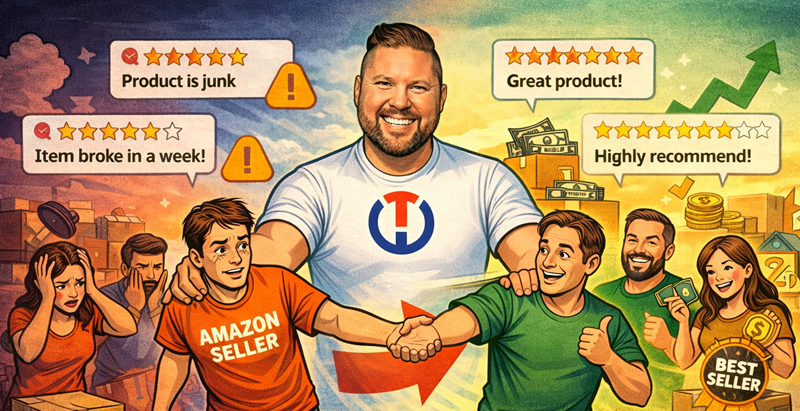
    When I founded eCom Triage, I was looking to solve a problem I’d been grappling with for years: the constant disruptions and challenges Amazon sellers face when it comes to reviews and catalog health.

    Here’s why I started this company, and what I’ve learned along the way.

    The Problem

    As an Amazon seller myself, I saw firsthand how easy it was for negative reviews—often unrelated to the product—to derail a business. I also noticed that Amazon wasn’t always clear or transparent when it came to catalog health issues. As a result, many sellers were operating blind, unaware of the issues damaging their businesses.

    The Solution

    I decided to build eCom Triage as a way to provide Amazon sellers with a clear, proactive approach to managing reviews and catalog health. By offering services that focus on the removal of invalid reviews and monitoring critical catalog issues, my team and I could help sellers protect their brands and improve their sales.

    This has become our mission.

    What I’ve Learned

    What I’ve learned over the years is that the key to success is transparency and reliability. Sellers need to know what’s working and what isn’t, and they need tools that will help them fix problems before they snowball into bigger issues.

    The Takeaway

    At eCom Triage, our mission is simple: to help sellers identify and resolve issues that cost money. We do this by showing up with real value, not empty hype.

    If you’re ready to take control of your Amazon business, we’re here to help.

    Contact us at eCom Triage

    Danan Coleman

    Founder

  • Amazon Alert: The Era of “Universal” Review Sharing is Ending

    Amazon Alert: The Era of “Universal” Review Sharing is Ending

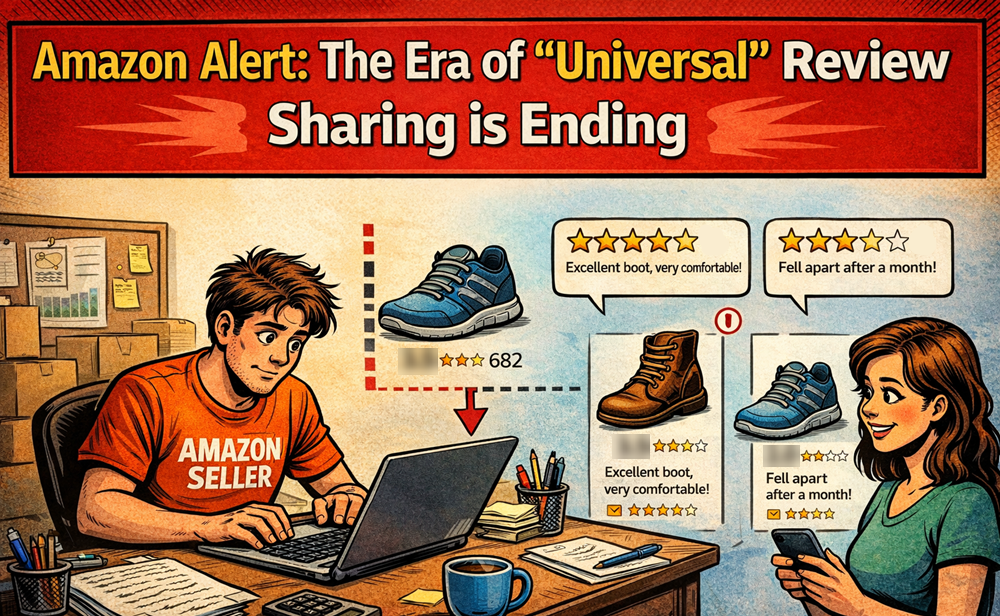
    Amazon is fundamentally changing how customer reviews are shared across variation families (parent-child ASIN structures). Starting February 12, 2026, a phased rollout began that restricts review sharing to only those products with “minor differences”.  According to Amazon reviews will only be shared when product variations have minor differences that don’t affect a product’s core functionality, otherwise reviews will no longer appear on variations with significant differences.

    In their own words, “Star ratings and rating counts help customers understand the overall feedback on a product. When products in a variation have significant differences in features or specifications, shared reviews may not accurately reflect the specific variation a customer is considering.”

    In other words, variations that are unique enough should have their own reviews. If your products are deemed to have “significant differences,” they will no longer share a pooled review count or star rating. This shift aims to provide customers with more accurate, product-specific feedback to inform their purchasing decisions.

    Read Amazon’s full announcement here:

    Guidelines for reviews shared across product variations

    What’s Changing?

    A few things.

    Eligibility-Based Sharing

    Reviews will now only be shared between variations with minor differences that do not affect the product’s functionality.

    Phased Category Rollout

    The update is being implemented gradually by product category from February 12, 2026, through May 31, 2026.

    30-Day Warning

    Amazon has committed to sending an email notification to sellers 30 days before their specific products are affected. We’ll see if that actually happens.

    Rating Impact

    For products no longer eligible for sharing, child ASINs may see a significant reduction in displayed review counts and a change in star ratings.

    What Will Still Share Reviews?

    Amazon has explicitly listed variation types that will continue to share reviews:

    • Color or pattern variations.
    • Size variations that maintain the same function (e.g., king vs. queen bedding).
    • Pack size or quantity variations.
    • Secondary scents for products where scent isn’t the primary focus (e.g., lemon-scented vs. unscented cleaners).
    • Model fitments for the same product type (e.g., different phone models for the same case style).

    Action Plan for Sellers

    We’re all used to the changing landscape that is Amazon.  It’s hard to be an Amazon seller and not be ready to make adjustments, sometimes at a moment’s notice.

    To prepare for this rollout, which is currently in progress (till May 31st, 2026), we recommend taking the following steps:

    1. Audit Your Inventory: Use the “Manage All Inventory” tool to review your current variation themes.
    2. Ensure Theme Accuracy: Confirm that your variation themes accurately reflect the differences between products (e.g., ensure a color variation is used for color differences, not a quantity variation).
    3. Remediate if Necessary: If you update your variation themes after the change takes effect, reviews will be re-shared—but only for products that meet the new eligibility criteria.

    The Bottom Line

    This is not a universal “split” of all reviews. However, for any variation family where the differences are functional rather than cosmetic, expect your review counts to decouple as Amazon moves toward ASIN-specific feedback.


    Contact us at eCom Triage


    Danan Coleman

    Founder

  • From 4.2 to 4.4 Stars: What It Meant for One Brand

    From 4.2 to 4.4 Stars: What It Meant for One Brand

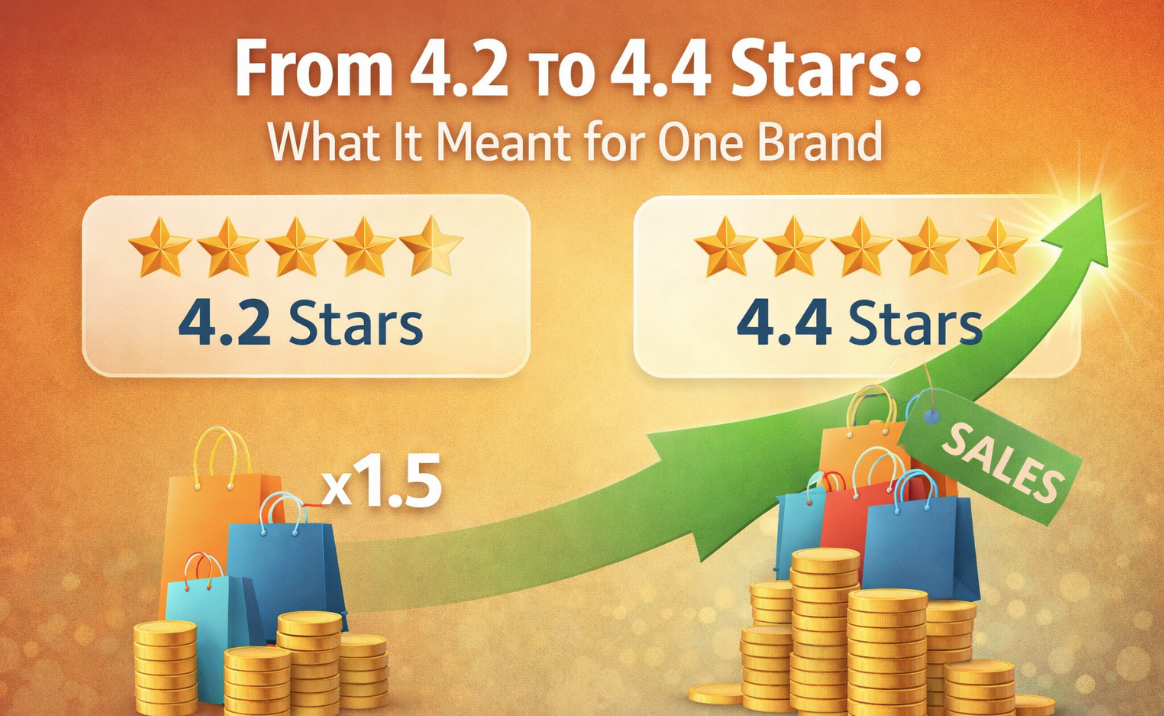
    One of our clients experienced a massive turnaround, going from 4.2 to 4.4 stars—and the results were astounding. Here’s how they did it and what it meant for their brand.

    The Situation

    This particular brand was struggling with a 4.2-star average. While not disastrous, this rating was significantly holding back their sales potential. A drop from 4.3 to 4.2 stars is a big deal, especially when you factor in how Amazon’s algorithm treats these small shifts.

    The Strategy

    The client decided to take a comprehensive approach to improve their star rating. This included:

    1. Addressing their most common negative reviews
    2. Optimizing their product listings
    3. Putting in place a review strategy

    The most impactful decision was to remove the negative reviews that were either unrelated to the product or violated Amazon’s policies.

    The Results

    Once the review strategy was implemented, the brand saw their star rating climb to 4.4 stars. This minor shift had a dramatic impact on sales, with a noticeable increase in both visibility and conversions.

    The Takeaway

    A small increase in your star rating can lead to big results. By proactively managing your reviews and removing negative, non-compliant feedback, you can improve your reputation on Amazon and increase your chances of success. This is where services like eCom Triage’s Review Removal can be a game-changer.

    Get in touch and see how we can help. Our team here at eCom Triage is standing by with answers.

    Contact Us at eCom Triage

  • What Amazon Sellers Need to Know About AI Tools

    What Amazon Sellers Need to Know About AI Tools

    AI is revolutionizing the eCommerce space, and Amazon sellers are in a unique position to leverage tools like ChatGPT and others for efficiency and growth. But what exactly can AI tools do for sellers, and how can you start using them?

    The Role of AI in eCommerce

    AI-powered tools can be used for a wide range of tasks, from customer service automation to product research and content creation. AI tools can help sellers:

    • Generate Product Listings: AI can help you create well-optimized product listings in bulk. It can analyze keywords, competitor listings, and customer reviews to craft product descriptions and bullet points that are more likely to convert.
    • Customer Support Automation: With AI, sellers can automate responses to customer inquiries, making it easier to handle large volumes of messages while maintaining a personal touch.
    • Market Research: AI can help generate insights into market trends, competitor strategies, and potential keywords, saving sellers time on research.

    The Takeaway

    Making use of AI tools can help Amazon sellers work smarter, not harder. The key is using AI to augment — not replace — the human elements that make your business unique. Human oversight is vital.

    While AI can handle repetitive tasks, it’s essential to focus on building genuine customer relationships and delivering high-quality products.

    Get in touch and see how we can help. Our team here at eCom Triage is standing by with answers.

    Contact Us at eCom Triage

  • 20+ Critical ASIN Issues Amazon Doesn’t Tell You About

    20+ Critical ASIN Issues Amazon Doesn’t Tell You About

    Amazon’s selling environment is dynamic, which means staying on top of catalog health is more important than ever. Did you know there are over 20 critical ASIN issues that Amazon doesn’t actively notify sellers about?

    Here’s what you need to watch for to ensure your ASINs are healthy.

    1. Inaccurate Product Listings

    If your product listings contain incorrect information (even if it’s not intentional), Amazon may suppress your listings or remove them entirely. Errors like wrong images, incorrect variations, or incomplete descriptions can result in a poor customer experience and even policy violations.

    2. Variation Problems

    Having multiple variations (size, color, etc.) for a single product is common, but if you don’t properly set up these variations, Amazon could merge your listings incorrectly, resulting in a cluttered catalog or confusion for customers.

    3. Product Detail Page Issues

    Missing key details or improperly optimized fields on your product detail page (like keywords or bullet points) can negatively affect your rankings, leading to less visibility and sales.

    4. Non-compliant Reviews

    Amazon flags reviews for policy violations, and sometimes these are connected to specific ASINs. If these reviews are not dealt with swiftly, they can damage your product’s reputation.

    5. FBA and Fulfillment Issues

    Even if your ASIN is eligible for FBA (Fulfilled by Amazon), if there’s a mismatch with your fulfillment settings or inventory count, it could impact your listing’s visibility and sales.

    6. Catalog Health and Performance Metrics

    Amazon will take down ASINs that consistently underperform on metrics like customer returns, out-of-stock statuses, or poor seller performance. It’s important to monitor your ASINs for these indicators.

    The Takeaway

    Catalog health is often overlooked until something goes wrong, but by monitoring and resolving these issues proactively, you can keep your listings competitive and compliant.

    Tools like eCom Triage’s Catalog Defender can help you track these critical issues before they escalate, ensuring your ASINs stay healthy and profitable.

  • How Amazon Calculates Star Ratings (and why it’s broken)

    How Amazon Calculates Star Ratings (and why it’s broken)

    Your star-rating impacts visibility, conversion rates, and sales. What you might not know is that Amazon’s method for calculating star ratings is far from perfect. Here’s a breakdown of how it works, and why it’s broken.

    How Amazon Calculates Star Ratings

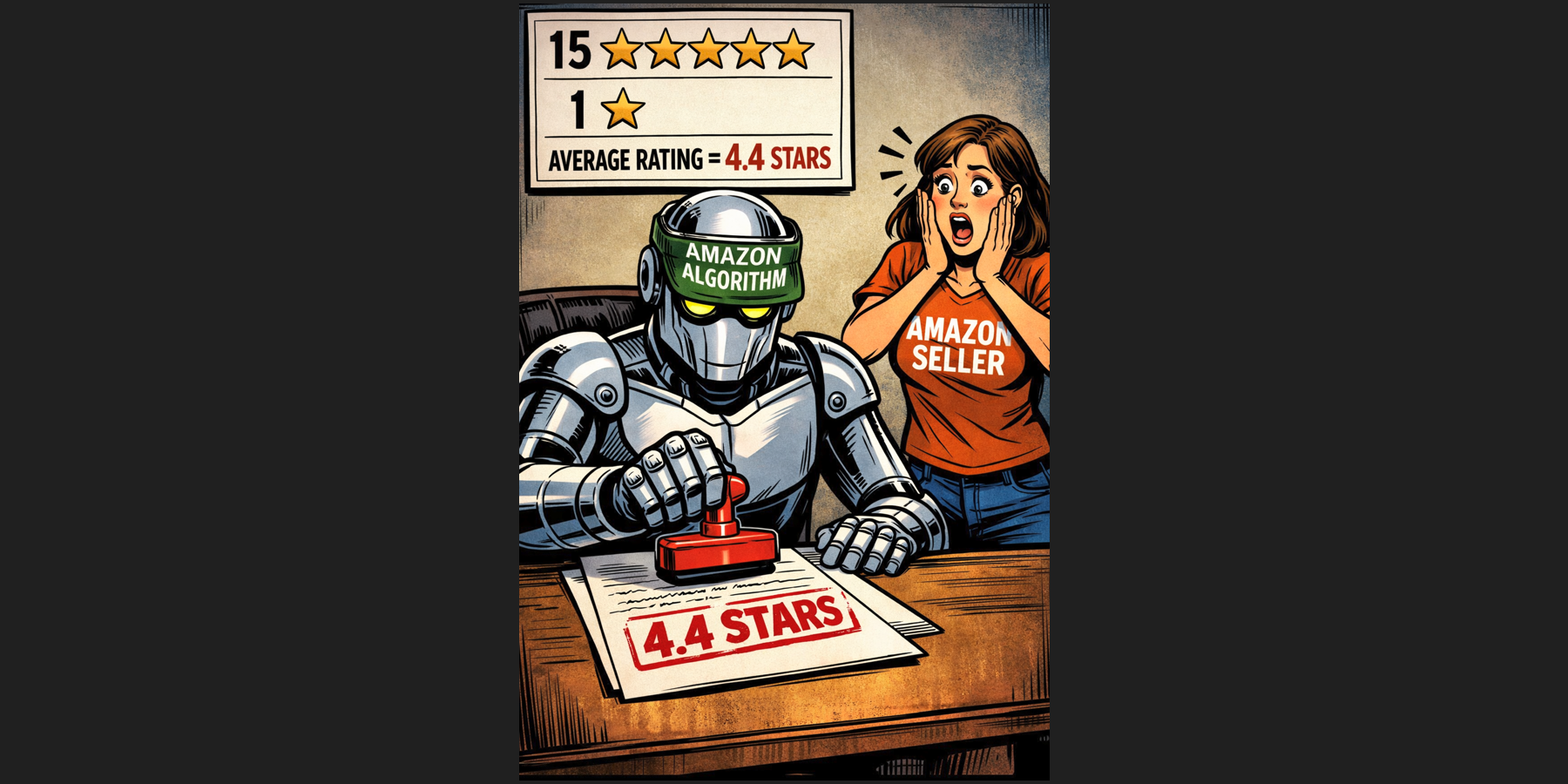
    Amazon uses an algorithm to calculate your product’s average star rating. You’d think it’s the sum of all ratings divided by the total number of reviews, right? Not quite.

    Here’s how it works.

    • Weighting of Reviews: Amazon’s algorithm doesn’t treat all reviews equally. Recent reviews carry more weight than older ones. So keep doing everything you can to drive positive reviews.
    • Impact of Star Ratings vs. Written Reviews: A 1-star review without a written explanation can outweigh a 5-star review with a detailed written review, especially at lower review quantities. This lack of distinction means that a negative star-rating may not actually reflect genuine issues with the product.
    • Quality of Review Content: Reviews that are detailed, well-written, and deemed helpful by other users can carry more weight. Do everything you can with the customer experience to drive high-quality positive reviews

    Why It’s Broken

    The biggest problem with Amazon’s star rating system is that it oversimplifies reality. A drop from 4.3 to 4.2 stars can be devastating for a product’s sales, yet this might happen due to one poorly timed 1-star review, which could be completely unrelated to the product’s quality.

    Another issue is how certain factors, like shipping or packaging complaints, can affect the star rating despite not being related to the product itself. This puts sellers in a tough spot, as they may end up dealing with unfair reviews they can’t do much about. Amazon rarely if EVER removes reviews that violate their ToS concerning shipping and packaging issues.

    The Takeaway

    While Amazon’s star ratings are a crucial metric, they’re far from perfect. As sellers, it’s essential to focus not just on getting positive reviews, but on strategically managing your review health.

    At eCom Triage we’ve built a free GPT to check your reviews. Schedule a Discovery call to see how we can help with your product reputation management.

    Contact Us Today